...but I'm trying.
“This is precisely the time when artists go to work. There is no time for despair, no place for self-pity, no need for silence, no room for fear. We speak, we write, we do language. That is how civilizations heal.”
- Toni Morrison
...but I'm trying.
“This is precisely the time when artists go to work. There is no time for despair, no place for self-pity, no need for silence, no room for fear. We speak, we write, we do language. That is how civilizations heal.”
- Toni Morrison
I posted this in 2012, and it seems particularly relevant at this time, when so many people are obsessed enough with The Economy that they're willing to hand our country over to an immoral, unprincipled, and greedy fascist.

“The ultimate hidden truth of the world is that it is something we make and could just as easily make differently.” -- David Graeber, The Ultimate Hidden Truth of the World: Essays
[602 words.]
I recently came across an article in David Byrne's nonprofit online magazine Reasons to Be Cheerful that I thought had interesting possibilities for theater. Reasons to Be Cheerful publishes articles that are "stories of hope, rooted in evidence" that are designed to "inspire us all to be curious about how the world can be better, and to ask ourselves how we can be part of that change," and I encourage anyone to subscribe (free) .
The article, entitled "Cultivating the Next Generation of Farmers in France," described "an initiative in the southwest of France that is helping young people become the country’s next generation of farmers via low-risk, small-scale and closely-supported projects — and thereby helping create ultra-local networks of organic, seasonal and low-carbon produce for city-dwellers. The so-called “Green Belt” project, which began in the French municipality of Pau, rents out modest, two-hectare plots of farmland near the city that are already prepared and equipped at an affordable rate for fledgling farmers."
The problem that is being addressed is twofold: an estimated 70% of current farmers are expected to retire in the not-to-distant future, usually without family members ready to step in and take over the farm; on the other hand, there was a generation of young people who were interested in being small, usually organic, farmers, but who were being prevented from doing so by the high cost of farmland and the prohibitive entry costs of equipment and materials. The Green Belt project is addressing the problem by buying farm land from retiring farmers and breaking it into 2-1/2 acre plots. "Each farm," author Peter Yeung writes, costs €200,000 ($220,000 US) to set up—half subsidized through Europe’s Common Agricultural Policy and the other half through a loan, which the farmers pay back over time through rent, making the project in theory self-sustaining." The new farmers sign "an annual renewable contract, with the right to remain on the site for at least 18 years." Meanwhile, the project provides education for the young farmers, and also endeavors to make sure that there is a ready market for the produce that is grown. Because they recognize that it will take a couple years to get the farm fully functional, the new farmers "pay a monthly contribution of a few hundred euros that progressively increases until the third year, at which point the rent is fixed for the rest of the period."
So what does this have to do with theater?
What if there was a program that did the same thing for young theater artists who want to start a company? A foundation would be created to provide with a small, fully equipped theater space that is paid for half through a grant and half through an interest-free loan. Company members would be required to go through training in building and running a theater--maybe my book Building a Sustainable Theater could be part of the curriculum! Their monthly rent would start out low and gradually increase over the three years it would take to find an audience and a functional business model. After three years, they would provide a report of their progress toward sustainability.
I was reminded of Muhammad Yunus's book Building Social Business: The New Kind of Capitalism that Serves Humanity's Most Pressing Needs.
I don't think we need a new generation of theater artists taking over the existing massive regional theaters with their legacy audiences and traditions; I think we need to give young artists a chance to start over and develop their own visions of what theater ought to be in the 21st century. They need seed money.

Every once in a while, I think I'll post a link or two to posts written earlier in the life of Theatre Ideas that seem worth revisiting today. I'll label these posts "Think Again" in the hope that the passage of time might lead to new ideas and perspectives regarding to the issue raised in the original post.
This one comes from 2011, when the Occupy Wall Street movement was having an impact on American economic discussions. At the same time, an important report by Holly Sidford and the the National Committee for Responsive Philanthropy issued a report entitled Fusing Arts, Culture and Social Change had also been released that examined patterns of arts giving in the US. After having read the report, I decided to crunch some numbers concerning philanthropic giving in the theater.
The result was a two-part "series" that showed the results of my research, which revealed that the regional theater scene had an even bigger income distribution problem than the culture as a whole that I called "Occupy Lincoln Center."
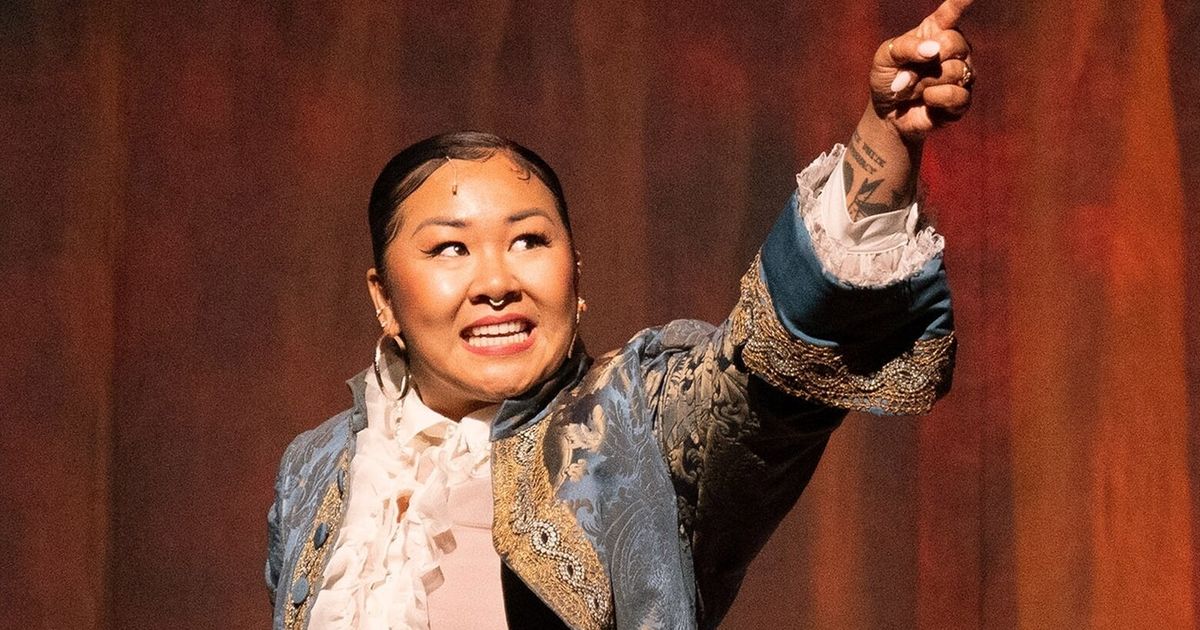
When Vulture writer Jason P. Frank published his interview with 1776 cast member Sara Porkalob on October 14th, the online theater world had a meltdown.
There were several things that got people exercised about the interview, but the part that seemed to cause the most outrage was at the very end of the interview when Porkalob was asked how much of "herself" she was giving to her performance in 1776. "I’m giving 75 percent," she answered forthrightly. "When I do [my solo] 'Molasses to Rum,' I’m giving 90 percent." From the reaction, you'd have thought she had admitted to sacrificing animals as a pre-performance warmup. How dare she not give 100%, outraged theater people shouted on the interview's website and on Twitter. Andrew Terranova's response is representative of the overall tone: "You are ungrateful for your job. You should be fired. Your attitude is the only thing old and dusty. Maybe if you spent less than 72 minutes a day pooping you’d have energy to show up for your 1 song." (Pooping? I have no idea...) He concluded his brief rant with #fireporkalob," a hashtag that, strangely, did not go viral. As time went on, I became convinced that New York's actors would assemble outside of American Airlines Theatre* prior to that night's performance of 1776, join hands, and belt out a medley of A Chorus Line songs concluding with an impassioned mashup of "Music and the Mirror" and "What I Did for Love."
Nevertheless, Porkalob is actually passionate about acting, and she seems committed to excellence. Audiences are "gonna get 75 percent, but that 75 percent will be great," she asserts, and reviews of her performance seem to bear this out. So no, this is not about phoning in a performance or a commitment to the art form, it is about something broader and more important: it's about work/life balance; about having something left for others; about living a life.
Porkalob is very clear about her self-evaluation: "Giving 100 percent of myself to everything all the time is a recipe for disaster," she explained. "How am I going to have time for myself, for my partner, or for my family?" Indeed, this seems to be a common theme for actors of late. For instance, Jesse Green wrote a series of articles this summer exploring the topic of abuse, self-care, and life within the theater community. Even before then, Amber Gray, in an interview with the Times' Michael Paulson after her departure from Hadestown, also mentioned work/life balance: "I asked for an alternate to do the Sunday matinee and Tuesday night, so that I could have three days off, away from that building, one of those days being Sunday, when my children are not in school. I wasn’t seeing my kids, and that was deeply painful. I didn’t have kids to not raise them. All I wanted was a little family time, and they gave it to me." I.e., she took two performances off from an eight-show-a-week schedule -- according to my math, that's 75%. But to my knowledge, when Paulson published this article, nobody blinked an eye, nor was Gray pilloried as an ungrateful, over-pooping slacker.
So what's different this time? Part of it, I suspect, is that Porkalob is a Broadway newcomer and, well, how dare she not spend every spare moment thanking God for her great good luck. She also has the temerity to be smart, articulate, confident, and willing to discuss and even question (gasp) interpretive choices and rehearsal processes. The latter is especially seen as a real breach of protocol. Like Fight Club, apparently, the first rule of theater rehearsal is you do not talk about theater rehearsal. (The second rule is that performers, when asked, should always crow some version of "it's the Best Goddamn Play I've Ever Had the Privilege of Being In." And the third rule is that interpretation is the Director's Job and performers should keep their mouths shut and do as they're told. Professional actors, don't @ me--you know this is true.)
Anyway, either Porkalob didn't get the memo, or more likely hit delete. And for that, I celebrate--would that there were more like her.
Lost in all this hysteria is something much more subversive: Porkalob's approach to her career. She doesn't see being an actor in a Broadway musical as the ultimate goal, the pinnacle of an actor's career. In fact, for her it's a fall-back. Asked whether 1776 is a "career move," she forthrightly says yes. "I told myself when I graduated in 2012 from undergrad that when the time came to move to New York, it would be on my own terms. The first choice would be to move here by introducing my original work. I'm living the second-best choice which is coming into New York already cast in a Broadway musical." But that's not the end goal. "I don't want just a career," she says. "I could make a career just being in commercial Broadway musicals....I guess the money would be fine....But I don't want that to be my life." Cue heads exploding throughout the Theatre District.
The interviewer, to his credit, recognizes that this is the center of the story, and he frames it by pointing out that Porkalob is "previously best known for her Dragon Cycle trilogy of solo-performed musicals exploring her family history," and so is "used to directing, starring in, and writing her own shows." In other words, Porkalob is identified as someone with a broader perspective than the typical performer in a Broadway musical. Indeed, the first part of the interview focuses on the directorial interpretation of several scenes, which Porkalob discusses insightfully, honestly, and critically.
Then Frank asks, "How does it feel to be in the back seat of decision making?" This is where it gets really interesting. "It's horrible. I hate it," she admits. "What I want to do with my time," she continues, "is make new works with collaborators." So: she wants to be in artistic control of the work, to choose her collaborators, and to make work that is new, original, and meaningful today. Performing in a revival of a 50-year old musical with a concept of warmed-over Hamilton leftovers can't compete.
But she's willing to delay her original creation in order to acquire more resources and a higher profile. "At the end of the day, if I'm compromising my desire to do my own work, but the resources are there, it really just comes down to labor. If I'm compromising, I'd better be getting paid a lot more money, honey."Asked what she hopes to get out of doing 1776, she responds with refreshing honesty about her own desires: "A Tony nomination, good reviews, and a smart, personable, hard-working agency that's ready to rep me." But she doesn't want to do just anything; she recognizes a broader social impact. "The casting [of 1776] provides resources. The resources include a weekly salary, but also exposure for actors who traditionally would not be cast in this show. In terms of visibility, it is showing our audiences all of these faces that wouldn't typically be seen." So while she's compromising, she's still living within her values. But she isn't living the dream, she's "going to work."
Personally, I have a hard time imagining that she will continue doing 1776 for eight years like Amber Gray did with Hadestown. Rather, once she has gotten the Tony nomination, the acclaim, and the hard-working representation, she will rush back to the artistic work about which she's passionate. She'll find the collaborators who can help her develop her vision, and tell the stories that she cares about. In other words, she'll go back to being an artist and leave being an employee behind. She will return to giving 100% of her "self," combining a playwright's creativity, a performer's intensity and talents, and a producer's drive. But, she says, making explicit her own career goal, "I want to choose when I do that."
She wants to be in control of the means of artistic production. She doesn't have the mindset of an employee. She doesn't want to bow down in gratitude for being allowed an opportunity to use her multiple talents. She wants to decide for herself when she is creating space for herself, her partner, her family, and when she will pour all of herself into creating a new project. And that's what is revolutionary about her interview. It's about true empowerment as an artist.
Which is why the attacks on her were instant and virulent. Her approach to her career explicitly rejects the well-worn Myth of Broadway and instead opens the possibility--a possibility that has been always been available--that theater artists can develop their own artistry by following their own vision and controlling the means of production.
* I still can't believe there is a theater on 42nd Street called American Airlines Theater, for crying out loud. It's like naming rights on football stadiums.


